

Introduction
In 2025, The United States spent around 2.67 billion in golf equipment. As a golfer, you’re always looking for ways to up your game, but what if the answer to a better golf swing isn’t always fancy equipment? Maybe it’s your posture.
Posture is one of the most important components of golf swing. Proper posture ensures efficient rotation, power generation, and consistency in your game. It sets the foundation for everything else in the swing and also helps prevent injury.
The three most common problems golfers face have to do with the mobility of the spinal thoracic cage, shoulders, and hips. The most important golf club you own is your spine and its components.
In this article, we’ll focus on the role of the spine’s thoracic cage in your golf swing. We’ll discuss how poor posture can hinder and prevent performance and practice and provide options for better thoracic mobility. Plus show you how assessing your PGS (Power Golf Swing ) profile can help you up your game of Power Golf.
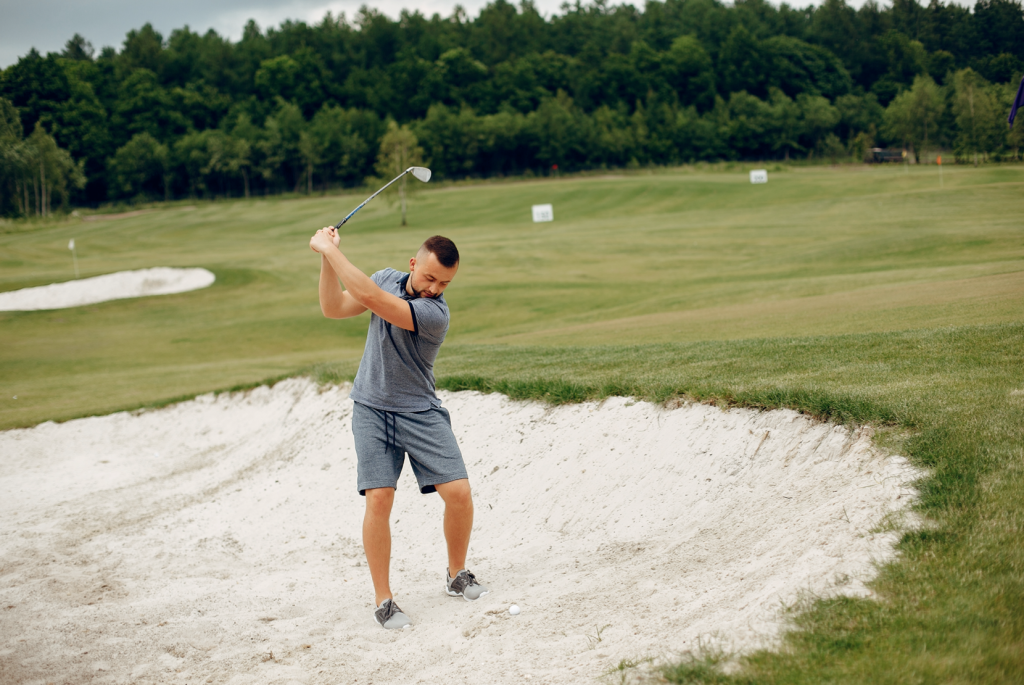
The role of the thoracic cage in your golf swing
The thoracic cage consists of the ribs and the sternum and protects major organs in the chest cavity: heart, lungs, and major blood vessels.
Thoracic mobility plays an important role in golf swing. A 2016 Study examined the biomechanics of modern golf swing and found that increasing thorax rotation during the backswing while restricting pelvic turn can generate higher club head speeds at impact and produce more power. This ability is demonstrated by many professional golfers, therefore backswing and pelvic turning is required as a necessity for full swings.
A 2018 study looked at how movement and timing of the pelvis and thorax affects golf swing speed. When a golfer’s upper and lower body twist in opposite directions, it creates angular separation, which is believed to help muscles store and release energy. When normal counter rotation is created in your swing, providing the thoracic and low back muscles to wind up for speed and power.
The study took 16 skilled golfers, had them hit golf balls using a 5-iron and 6-iron. The golfers played 10 shots each for 3 different effort levels. The study found that how your pelvis and thorax move together during a golf swing affects your power, especially during the last part of the downswing. The downswing exists because of the mechanics of your pelvis and thoracic to create wind up in your swing.
How bad posture affects golf swing
Bad posture can have a big impact on your overall performance. A 2002 study found that anterior/posterior translation can cause significant changes in thoracic curve, lumbar tilt, and pelvic tilt showing that bad posture can negatively affect the spine and other parts of the body. Hence poor posture changes the s-line (spinal posture) of your spine and changes all spinal mechanics in your swing.
Slouching is a common error in golf posture. Anterior translation, the forward movement of the chest, away from the spine, and towards the front of the body results in limited mobility, reduced power and inconsistency.
It can also result in injury. A lack of thoracic rotation forces the body to use other movements and leads to reduced backswing, loss of power, and increased risk of injury due to excessive strain on the lower back. When this happens, golfers return to their death grip.
Improving Thoracic Mobility
This video contains many useful exercises for improving thoracic spine mobility.
Improving your golf swing starts with improving your posture
A well-balanced power golf swing has your spine at its core axis, and involves every muscle, tendon, bone and joint in your body If any of these are limited. It compromises your golf swing, and makes it incapable of achieving maximum power and accuracy. Assessing your swing can help. Remember, the most important club is you.
Power Golf Swing
Power Golf Swing (PGS) measures how well the biomechanics and posture of the spine are in tune with another and provides the highest quality spinal biomechanics to create a power golf swing. A high PGS profile means a lower score.
Conclusion
Thoracic mobility is a very important aspect of your golf game, and your posture could be your most important upgrade for this season.
Schedule a PGS assessment today!
The Posture Doc Explains the Thoracic Mobility to Improve your Golf Swing with Power, Speed and Consistency
References
1. Statista.com
2. Understanding the Role of Posture in the Golf Swing
3. Lumen Learning: The Thoracic Cage
4. Blog: Improving Your Golf Swing by Improving Thoracic Mobility 5. Blog: Why is Thoracic Mobility so Important
6. Youtube: Golf Swing Tips & Tricks
7. Youtube: Anterior/Posterior Thoracic Translation
Research Papers
1. The role of pelvis-thorax coupling in controlling within-golf club swing speed
2. The Biomechanics of the Modern Golf Swing: Implications for Lower Back Injuries